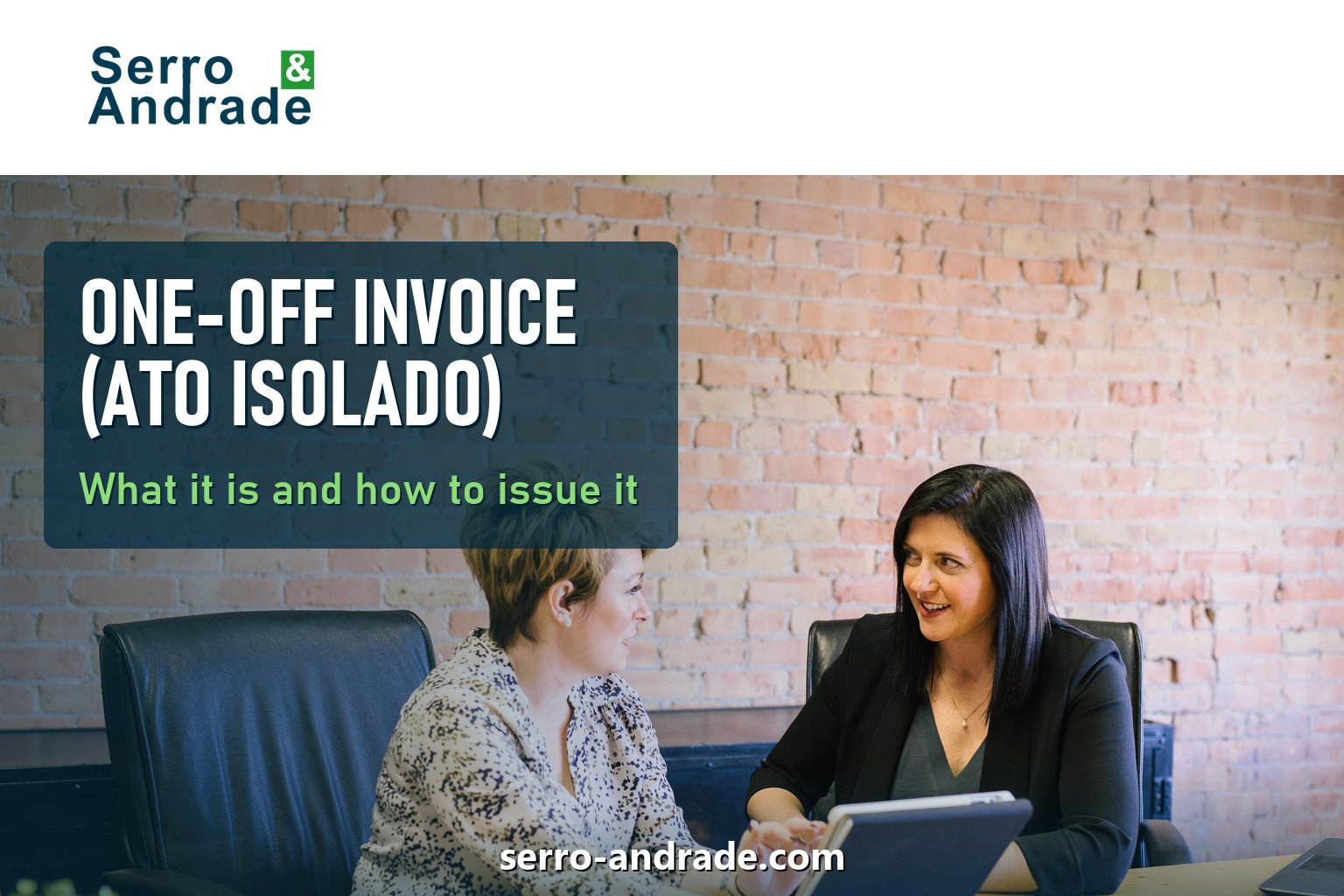
In summary: A one-off transaction is an occasional sale or service that will not be repeated. An invoice-receipt for a one-off transaction is issued via the Finance Portal, without opening a session, whatever the amount. VAT is charged and payment is made by the end of the following month, and the income is declared in Annex B of the IRS. If the client keeps proper accounts, they withhold 11.5% per service.
What is an isolated incident?
The IRS Code defines an ‘isolated act’ as income that does not result from a foreseeable or repeated practice (Article 3(3)): a one-off translation, a one-off consultancy assignment, or the sale of a product that will not be repeated. If the work is regular, or if it is expected to be repeated, it is no longer an isolated act: it is necessary to register a business with HM Revenue & Customs.
Anyone who has ceased trading may not carry out a one-off transaction in the year of cessation or in the following year: they must resume trading.
How it works
- On the Finance Portal, go to ‘Invoices and Receipts’ and select ‘Issue’.
- Please select the type of document: invoice-receipt, when payment is made on the day of the transaction; or an invoice, followed by a receipt once payment has been received.
- Please state that this is a one-off transaction, and provide the customer’s details, the description, the amount and the VAT.
There is no need to submit a declaration of commencement of activity, regardless of the value of the transaction (Article 31(3) of the VAT Code). The invoice must be issued by the fifth working day following the transaction, or on the date of receipt if payment is made in advance.
VAT: always charged
The VAT exemption for small self-employed traders (Article 53, up to €15,000) not applicable those who carry out a single taxable transaction. In the case of a single transaction, VAT is charged at the rate applicable to the service or good (23%, as a general rule) and this VAT must be paid by the end of the month following that in which the transaction took place. VAT is not charged only if the transaction is exempt by nature, such as certain health or education services.
Income Tax and PAYE
- The income is declared on the annual income tax return, in the Appendix B, and is taxed in accordance with the simplified scheme: 75% of the value for services listed in the table in Article 151, 35% for other services and 15% on sales.
- If the customer has their accounts in order, retain 11,5% in respect of a one-off provision of services, unless an exemption is requested on the grounds that the annual income is expected to be less than €15,000. No tax is withheld on sales.
- If the amount is less than four times the IAS and the household has no other income, you may be exempt from filing an IRS return.
Example
A designer working as an employee creates a company logo on a one-off basis for €1,000. She issues an invoice for a one-off service of €1,000 plus €230 VAT. The company, which keeps organised accounts, withholds €115 in income tax (11.5%) and pays her €1,115. The designer pays the €230 VAT by the end of the following month and, in her annual income tax return, declares the transaction in Annex B: €750 (75%) is added to her employment income, and the €115 withheld is deducted from her tax liability.
Frequently asked questions
Is there a value limit for a single transaction?
For the purposes of commencing business, the following does not apply: the exemption from the declaration applies regardless of the amount. What matters is whether the transaction is of an occasional nature.
Can I submit two separate applications in the same year?
If the transactions are genuinely independent and occasional, the law does not prevent this. However, if they start to become a regular occurrence, the tax authorities may consider this to be a regular business activity, in which case you will need to register your business.
The role of Serro & Andrade
We’ll let you know whether a job can be treated as a one-off transaction or whether you need to register a business; we’ll help you issue an invoice with the correct VAT rate and include the transaction in your income tax return. Please also read the guide on self-employed invoices: simplified scheme or organised accounting or get in touch with us.
Legislation and sources
- AT, ‘An isolated incident’
- Income Tax Code: Articles 3, 31, 101 and 101-B; VAT Code: Articles 27, 31, 36 and 53
The figures and rules referred to are those that were in force on the date the text was revised.
By António Serro da Fonseca, Certified Accountant